

 Building Configurator
 Request a Quote

Article: Private Aircraft Hangar for Cessna 172 Protection
Private Aircraft Hangar for Cessna 172 Protection
The Challenge
A private pilot in Oxfordshire owned a Cessna 172 based at a small grass airfield. The aircraft was tied down outdoors on the apron, exposed to British weather year-round. Constant rain, sun, and temperature fluctuations were taking their toll - the aircraft's paintwork was fading, rubber seals were degrading, and avionics were suffering from moisture ingress. Pre-flight inspections increasingly revealed weather-related issues requiring rectification.
Commercial hangar rental at nearby airfields cost £250-350 monthly when space was available, which was rare. Annual hangarage costs of £3,000-4,200 represented substantial ongoing expense. Traditional steel aircraft hangars quoted at £35,000-50,000 were financially prohibitive for a private owner. The pilot needed affordable on-site aircraft protection to preserve the Cessna's condition and value.
The Solution: 36ft x 46ft Fabric Aircraft Hangar
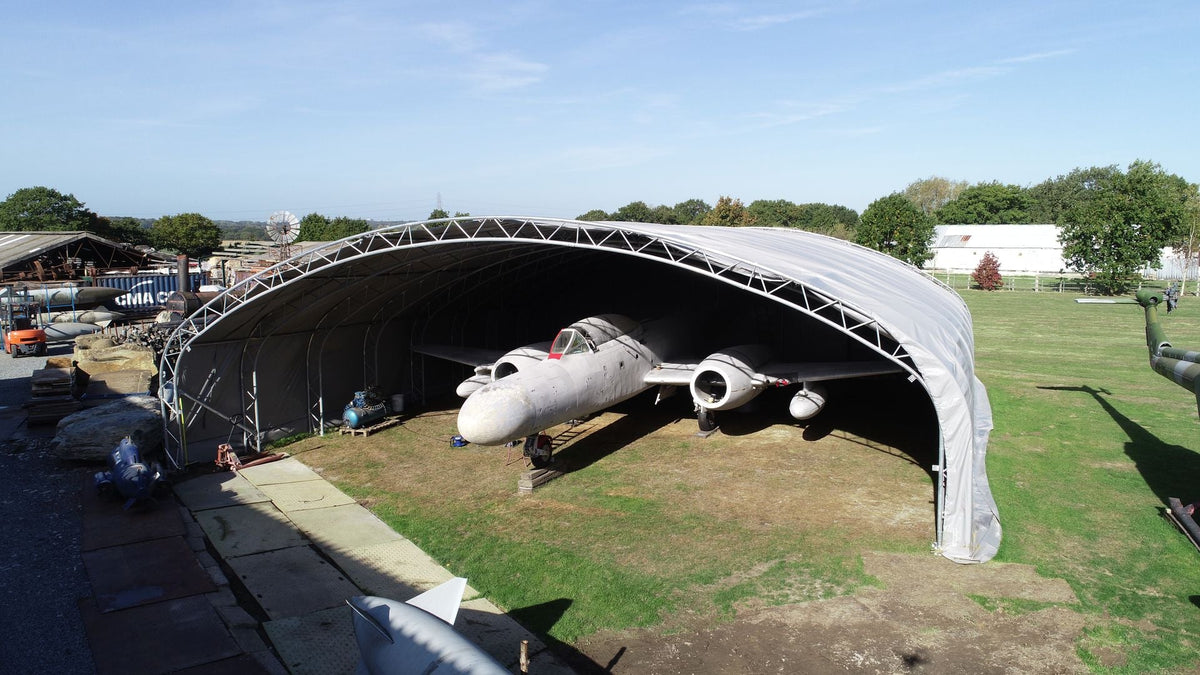
After researching options, the pilot selected Kit Buildings' 36ft x 46ft (11m x 14m) Fabric Aircraft Hangar with sliding rail door. The structure provided dedicated aircraft protection at a fraction of traditional hangar costs, installed at the pilot's own property adjacent to the airfield.
Product Specifications
-
Size: 36ft x 46ft x 16ft (11m x 14m x 5m)
-
Floor Area: 1,656 square feet (154 square meters)
-
Frame: Double-truss hot-dip galvanized steel
-
Covering: 610g/m² fire-resistant PVC fabric
-
Door: Sliding rail door system
-
Color: Grey
-
Foundation: Concrete slab
Why the Design Works for Single Aircraft Storage
Appropriate Dimensions for Cessna 172
The 36ft x 46ft footprint provides excellent space for the Cessna 172. The aircraft's 36ft wingspan fits comfortably with adequate wingtip clearance on both sides. The 46ft depth accommodates the aircraft's length with space for engine access, pre-flight checks, and minor maintenance activities inside the hangar.
The 16ft apex height provides generous clearance above the Cessna's vertical stabilizer. This height allows comfortable movement around the aircraft and provides adequate ventilation. The clear-span design eliminates interior columns that would complicate aircraft maneuvering and positioning.
Double-Truss Steel Construction
The galvanized steel double-truss frame delivers structural strength essential for aircraft hangar applications. The aviation-grade engineering withstands wind loads and weather stresses without flexing or movement. After three years of operation, the structure shows no deformation or structural concerns despite exposure to storms and high winds common in open airfield locations.
The galvanization provides comprehensive corrosion protection crucial in aviation environments. Exposure to fuel vapors, hydraulic fluids, and constant moisture hasn't caused any rust or deterioration. The frame remains in excellent condition, maintaining structural integrity and appearance.
Fire-Resistant PVC Covering
The 610g/m² fire-resistant PVC fabric provides critical fire safety for aircraft storage. Aviation fuel and aircraft systems create fire risks that make fire-resistant construction essential. The specialized fabric meets fire safety standards while delivering weather protection and durability.
UV resistance protects both the hangar fabric and the aircraft inside. The Cessna's paintwork is shielded from direct sunlight that causes fading and degradation. Plastic components, upholstery, and instrument panels remain protected from UV damage that shortens their service life.
Sliding Rail Door System
Wide Opening for Aircraft Access
The sliding rail door spans the full hangar width, providing unobstructed access for aircraft movement. The Cessna can be pushed straight in and out without complex maneuvering or tight clearances. The wide opening eliminates the risk of wingtip contact or door strikes during hangar operations.
The door operates smoothly on the rail system, requiring minimal effort to open and close. One person can easily operate the door without assistance, making solo hangar operations practical. The simple mechanical system requires no electrical power, ensuring reliable operation without power supply complications.
Weather Sealing
When closed, the door provides effective weather sealing. Multiple overlap points and tension systems prevent rain and wind penetration. The aircraft remains protected from weather regardless of external conditions. Moisture control prevents the condensation and humidity problems that damage avionics and promote corrosion.
Installation and Site Setup
Concrete Foundation
The pilot arranged a concrete slab installation matching the hangar dimensions. Local contractors completed the groundwork in one week, creating a level, well-drained surface. The concrete provides a solid base for the hangar and creates a clean, dry surface for aircraft operations.
Ground anchors secure the hangar frame to the concrete, providing wind resistance essential in the exposed airfield location. Professional installation of the anchoring system ensures structural stability even during severe weather.
Professional Assembly
Kit Buildings' installation team erected the hangar over two weeks. The double-truss frame assembly required crane assistance for positioning the larger steel components. The PVC covering installation followed frame completion, with tensioning systems ensuring proper fabric performance.
The sliding door installation completed the project. Professional fitting ensured smooth operation and proper weather sealing. Total project cost including groundwork, hangar, and installation came to approximately £12,500 - representing 65-75% savings compared to traditional steel hangars.
Three-Year Performance Review
Aircraft Protection Results
The Cessna's condition has improved dramatically since hangar installation. Paintwork maintains its original luster without the fading common in outdoor-stored aircraft. Rubber seals remain supple and effective. Avionics show no moisture-related issues. The aircraft consistently starts immediately without the temperamental behavior that affected it when stored outdoors.
Pre-flight inspections now focus on mechanical systems rather than weather-related deterioration. Maintenance requirements have decreased noticeably. The aircraft's value has been preserved, with condition surveys noting the excellent state of preservation for a 15-year-old aircraft.
Operational Benefits
Hangared storage eliminates pre-flight aircraft preparation time. Previously, outdoor storage required removing tie-downs, covers, and often wiping down moisture before flight. Hangared aircraft are always ready to fly, improving operational efficiency and spontaneous flight opportunities.
Winter operations improved substantially. The enclosed hangar prevents frost and ice accumulation on the aircraft. No more scraping ice from windows or dealing with frozen control surfaces. Aircraft can be preheated comfortably inside the hangar during cold weather.
Weather Performance
The fabric hangar has withstood three years of airfield weather without issues. High winds, heavy rain, snow loads, and summer sun haven't affected structural integrity or fabric condition. The fire-resistant PVC shows no degradation, maintaining weather protection and appearance.
Storm events that damaged other airfield structures left the fabric hangar completely unaffected. The engineered design and proper anchoring provide confidence in long-term structural reliability.
Value Analysis
Cost Comparison
The £12,500 total investment eliminated annual rental costs of £3,000-4,200. The hangar pays for itself within 3-4 years compared to commercial rental, and within 10-15 years compared to traditional hangar construction. The 20+ year expected lifespan delivers decades of cost-effective aircraft protection.
Aircraft Value Preservation
Proper hangarage preserves aircraft value substantially. Weather-exposed aircraft depreciate faster due to deteriorating paintwork, faded interiors, and corrosion concerns. Hangared aircraft maintain condition and command premium resale values. The hangar investment protects the aircraft's £80,000+ value effectively.
Operational Flexibility
On-site hangarage provides flight operations flexibility impossible with commercial rental. No restricted access hours, no airfield closures affecting aircraft access. Maintenance can occur on convenient schedules without coordinating hangar availability. This flexibility enhances aircraft utilization and flying enjoyment.
Conclusion
This case study demonstrates how fabric aircraft hangars deliver practical, affordable protection for private aircraft owners. The 36ft x 46ft size accommodates single-engine aircraft perfectly, while the double-truss galvanized steel construction provides aviation-grade structural integrity. The fire-resistant PVC fabric meets aviation safety requirements while delivering comprehensive weather protection. The sliding rail door system facilitates easy aircraft operations.
For private pilots requiring aircraft hangarage at realistic costs, fabric hangars offer professional-grade protection at 65-75% savings compared to traditional construction, while eliminating ongoing rental expenses and providing operational flexibility.